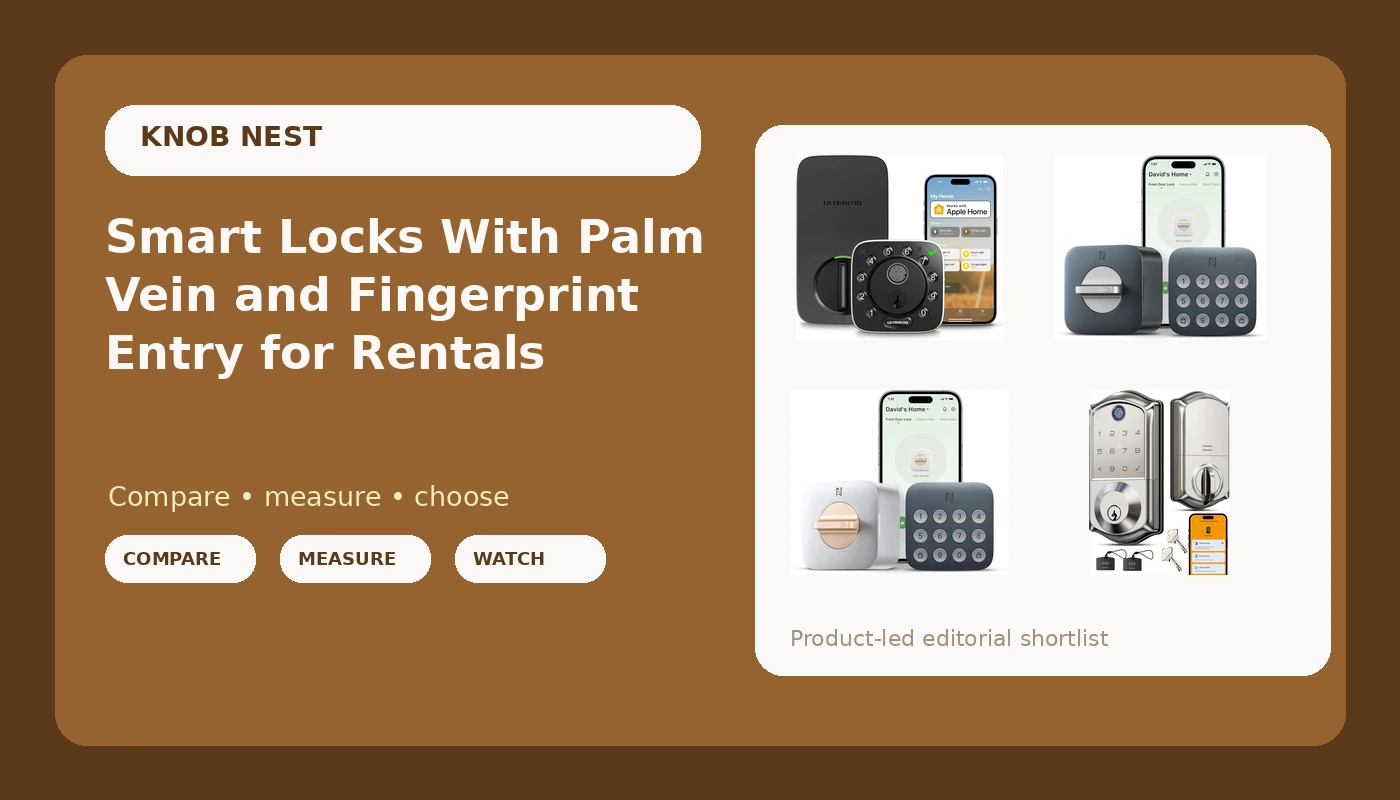
If you own a rental, host on Airbnb, or you are simply tired of hiding a key under a rock for guests, the lock on your door is doing two jobs at once: letting the right people in and keeping everyone else out. Smart locks for rentals and front doors have to do both without a gateway that refuses to pair, a fingerprint reader that quits at month seven, or a monthly fee for the privilege of opening your own door.
The six locks below are worth putting on a shortlist right now. They cover the range of what buyers actually ask for: palm vein entry on a flagship, a BHMA-rated fingerprint lock with WiFi built in, keypad deadbolts that install non-destructively, and a straightforward fingerprint model in satin nickel. Each one solves a slightly different version of the same problem.
Related: How to Pair a Smart Lock Gateway in the Right Order
Quick answer
The ULTRALOQ Bolt Fingerprint WiFi Smart Lock with Sensor, Remote Control, BHMA is the strongest fit for a main entry door that needs remote access without extra hardware, because it combines a fingerprint reader, WiFi built into the lock, remote control through its app, and BHMA-rated hardware in a single unit. Choose the eufy Security Smart Lock FamiLock S3 Max with Palm Vein Recognition instead when you want palm vein entry on a flagship lock.
Smart locks worth comparing
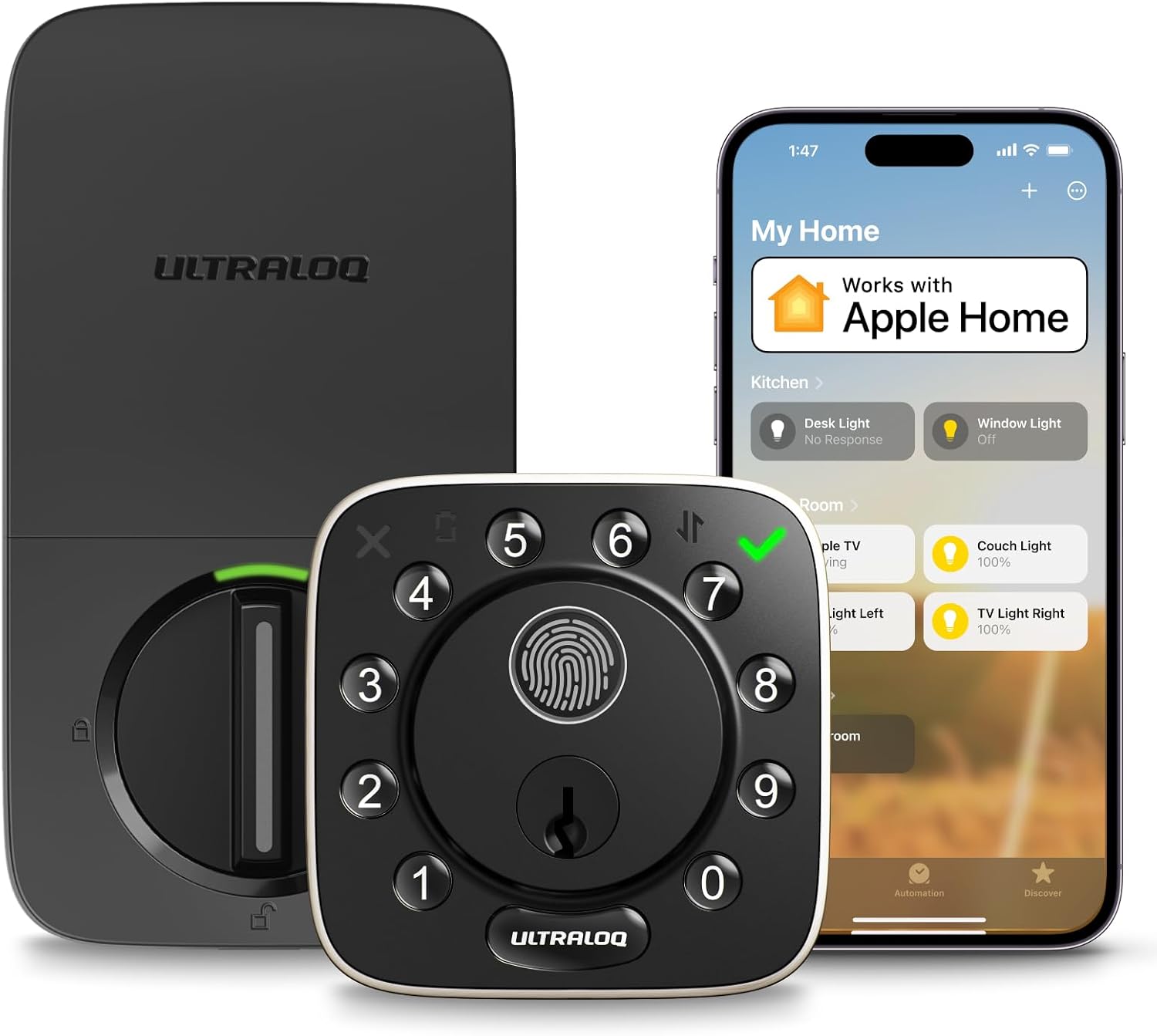
ULTRALOQ Bolt Fingerprint WiFi Smart Lock with Sensor, Remote Control, BHMA
Check current Amazon price
A fingerprint smart lock with WiFi built into the unit, a sensor, remote control through the app, and BHMA-rated hardware. One device on the door, no separate hub to pair.
Visit on Amazon
eufy Security Smart Lock FamiLock S3 Max with Palm Vein Recognition
Palm vein recognition entry from eufy's FamiLock line, built for buyers who want an entry method other than a fingerprint reader.
Visit on Amazon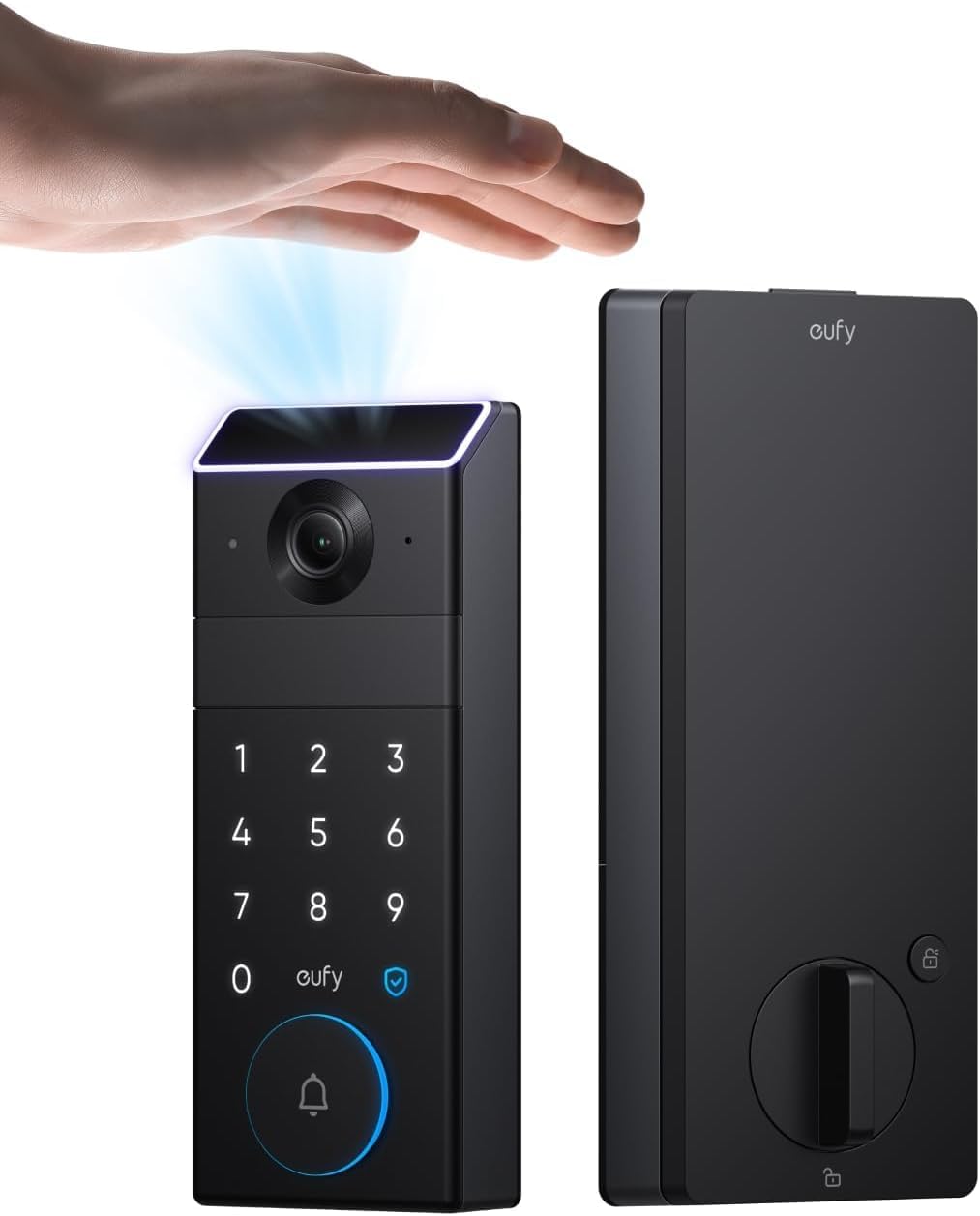
eufy Security Video Smart Lock FamiLock S3 with Palm Vein Recognition
Palm vein recognition with a video element at the same door, so the entry point and the view of it live in one unit.
Visit on Amazon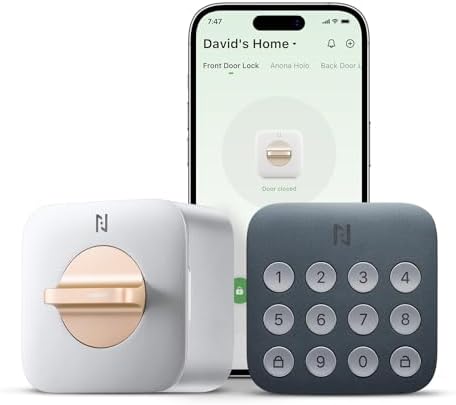
Anona Holo Wi-Fi Smart Lock with Keypad, Keyless Entry Deadbolt Door Lock with App Remote Control, AutoLock & Anomaly Detection, Non-Destructive Installation, Supports Alexa, Apple Home
Check current Amazon price
A WiFi keypad deadbolt with keyless entry, app remote control, auto-lock, anomaly detection, and non-destructive installation. Listed as supporting Alexa and Apple Home.
Visit on Amazon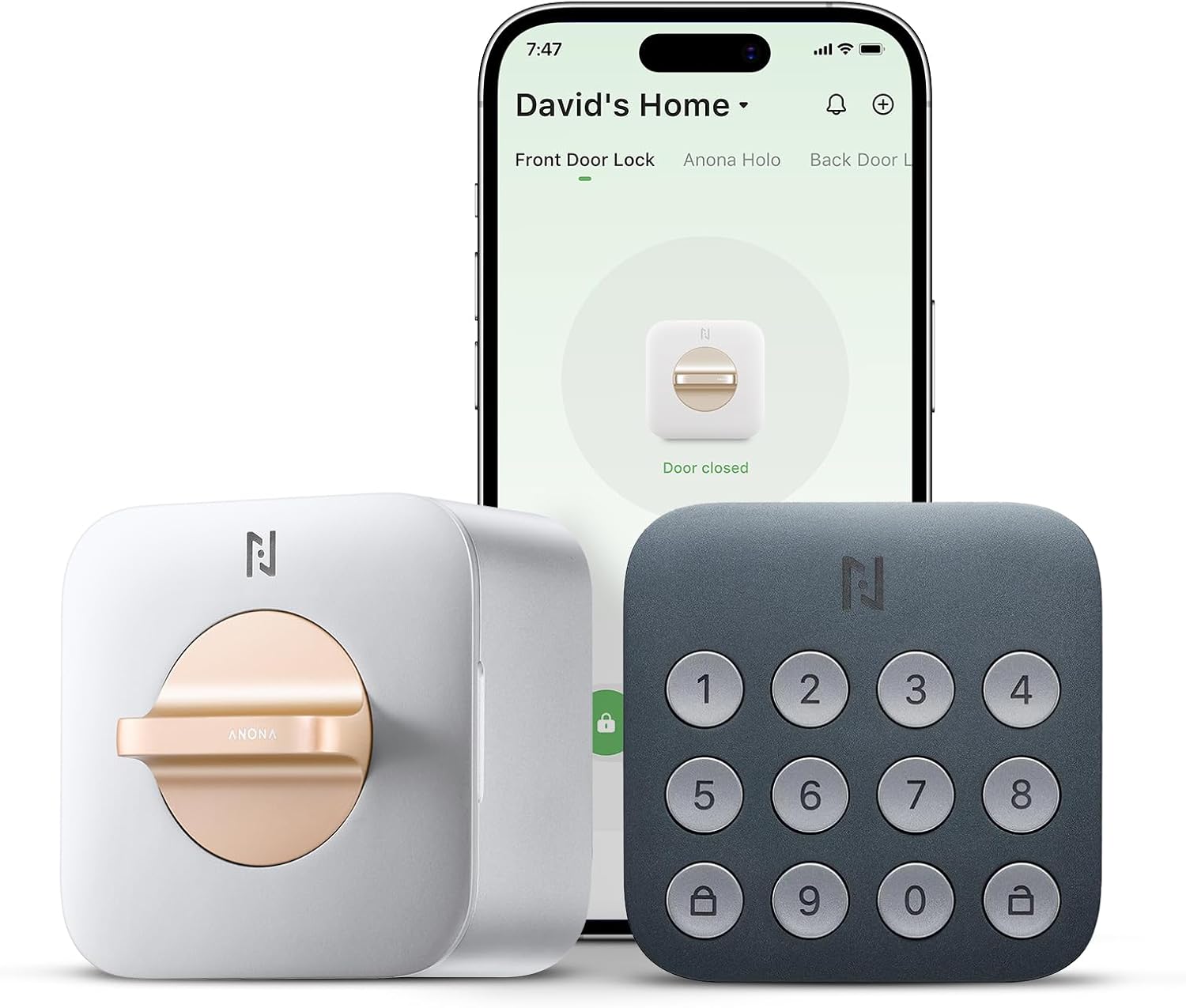
Anona Holo Wi-Fi Smart Lock with Keypad, Keyless Entry Deadbolt Door Lock with App Remote Control, AutoLock & Anomaly Detection, Non-Destructive Installation, Supports Alexa, Apple Home
Check current Amazon price
A second listing of the same Anona Holo model and feature set: WiFi keypad, keyless entry, app control, auto-lock, anomaly detection, non-destructive install. Confirm the variant on the listing page.
Visit on Amazon
Veise VE017 Fingerprint Smart Door Lock with App Control, Satin Nickel
A fingerprint smart door lock with app control in a satin nickel finish, for doors where the hardware has to match what is already there.
Visit on AmazonPrices and availability may change. Check the retailer for current details.
How these products were compared
This guide compares entry methods, connectivity, installation requirements, access and management features, and hardware certification. Product names, images, and retailer links are matched by ASIN so that every card points to the product shown.
Entry method is the first split. Three of these locks read a fingerprint, two use palm vein recognition, and the two Anona Holo listings lead with a keypad and keyless entry. Entry method decides who can get in without a phone, which matters more than people expect when a guest arrives with a dead battery.
Connectivity is the second. The ULTRALOQ Bolt lists WiFi as part of the lock itself, which means remote control without a separate hub. The Anona Holo listings pair WiFi keypad hardware with app remote control. The eufy FamiLock models center on palm vein recognition. If you have ever fought a gateway through a pairing sequence, you already know why this distinction can decide a purchase.
Installation requirements are the third. The Anona Holo listings call out non-destructive installation, which is the phrase to look for if you rent, lease, or do not want to modify a door. The rest of the group is a standard deadbolt replacement.
Access and management features are the fourth: auto-lock and anomaly detection on the Anona models, app control on the Veise VE017, and remote control on the ULTRALOQ Bolt. Hardware certification is the fifth, and the ULTRALOQ Bolt is the one here carrying a BHMA rating, a third-party hardware standard worth weighing against a longer feature list.
These comparisons come from the manufacturer-listed specifications on each product page. Nothing here is a bench test, and no number should be read as a measurement taken in a home.
How to choose the right smart lock
Start with the door, not the feature list. Measure the existing deadbolt and confirm the backset and door thickness before you order anything, because a lock that does not fit is a return no matter how good the app is.
Then decide how people will actually get in. A fingerprint reader is fast for the two or three people who live there. A keypad is better for guests, cleaners, and contractors who need a code you can delete later. Palm vein recognition is the newer option in this group, and the two eufy models are the ones to look at if that is the entry method you want. Whatever you pick, make sure there is a backup: a keypad, a physical key, or both.
Connectivity comes next. A lock with WiFi built in, like the ULTRALOQ Bolt, gives you remote control without another device on the wall. A lock that relies on a separate hub adds a step to setup and one more device that can fail on its own. Most locks and hubs in this category speak only the 2.4GHz band, so check your router before you buy rather than after. If your network broadcasts a single combined SSID or a 5GHz-only signal, you may spend the evening troubleshooting instead of installing.
If a hub does end up in the mix, the setup order matters more than the manual usually admits. Pair the lock to the app first, then add the gateway. Doing it backwards is the most common reason people end up with a lock that will not connect, and it is covered in our guide to gateway pairing order.
Finally, read the fine print on remote access. Any lock that gates basic remote functions behind a subscription is a worse deal than it looks, because the monthly cost keeps running long after you have forgotten what you paid for the hardware.
ULTRALOQ Bolt Fingerprint WiFi Smart Lock with Sensor, Remote Control, BHMA
The ULTRALOQ Bolt covers the most ground for the fewest compromises. It reads a fingerprint, it includes WiFi in the lock itself so remote control does not depend on a separate hub, and it carries a BHMA rating on the hardware. The sensor and remote control features round out a package aimed at a main entry door used by family, guests, and anyone else you hand access to.
For a landlord or a host, the appeal is the combination: one device on the door, no gateway to pair, and an app that can confirm the door state from somewhere else. For a homeowner, the appeal is simpler. You walk up with groceries, touch the reader, and the door opens.
The trade-off is that this is a fingerprint-first lock. If your household includes people whose prints are hard to read, or if you want a keypad as the primary entry method for rotating guest codes, the Anona Holo listings put the keypad front and center instead. There is also no video component here, so if you want to see the porch as well as unlock it, the eufy Security Video Smart Lock FamiLock S3 is the one to look at.
Alternatives to consider
The eufy Security Smart Lock FamiLock S3 Max with Palm Vein Recognition is better suited to a buyer who wants palm vein entry and does not need a video feature. The Anona Holo Wi-Fi Smart Lock with Keypad is a stronger fit when you want keyless entry driven by codes, app remote control, auto-lock, and anomaly detection, and you need a non-destructive installation because the door is not yours to modify.
The Veise VE017 Fingerprint Smart Door Lock with App Control covers the fingerprint-plus-app approach in a satin nickel finish, which is the practical choice when new hardware has to match what is already on the door. The second Anona Holo listing is the same model name and feature set as the first, so treat them as two listings of one design and confirm which variant you are buying on the listing page before checkout. The eufy Security Video Smart Lock FamiLock S3 with Palm Vein Recognition covers the case where you want palm vein entry and a video element at the same door.
Day-to-day use and maintenance
A smart lock lives on a door that gets slammed, rained on, and used by people who will not read the manual. The routine that keeps one working is short.
Wipe the fingerprint or palm sensor with a dry, soft cloth when it stops reading on the first touch. Skin oils, sunscreen, and dust build up on the reader surface, and that buildup is the usual reason a reader that worked in month one starts missing later.
Replace batteries on a schedule rather than waiting for the low-battery warning, and keep a physical key or a keypad code as a backup path. A dead battery should never be the reason someone stands outside.
Check the deadbolt throw after installation and again after the seasons change. The bolt should extend fully into the strike plate every time. If it does not, the door looks locked while the bolt is barely catching, which is the failure that matters most and the one nobody notices until it is tried from the wrong side.
Keep firmware updated through the app, and clean or lubricate moving parts as the manufacturer instructs. On a rental, delete guest codes after each stay instead of leaving old ones live, and issue temporary codes to contractors rather than sharing one permanent code.
One caveat worth stating plainly: no smart lock fixes a door that is out of alignment or a frame that is soft. If the door does not close cleanly with a standard deadbolt, fix that first.
Buying checklist
- Measure the door thickness and the existing backset before ordering.
- Choose the entry method, fingerprint, keypad, or palm vein, based on who needs in and how often codes change.
- Confirm whether the exact model has WiFi built in or needs a separate hub.
- Check that the listing includes the mounting hardware and cover plate for your door.
- Verify support for the platform you actually use, whether that is Alexa, Apple Home, or a manufacturer app.
- Check whether remote access requires a subscription before you commit.
- Confirm the installation type, especially if you need a non-destructive fit.
- Verify the current retailer price, availability, and return terms before you buy.
Final recommendation
Choose the ULTRALOQ Bolt Fingerprint WiFi Smart Lock with Sensor, Remote Control, BHMA when you want a main entry lock with fingerprint entry, WiFi built in for remote control, and rated hardware without adding a hub. Choose the eufy Security Smart Lock FamiLock S3 Max with Palm Vein Recognition when palm vein entry is the feature you are shopping for. If keypad codes and a non-destructive install are the priority, the Anona Holo Wi-Fi Smart Lock with Keypad is the fit. And if matching hardware and a simple fingerprint reader matter most, the Veise VE017 Fingerprint Smart Door Lock with App Control keeps fingerprint entry and app control in a satin nickel finish.