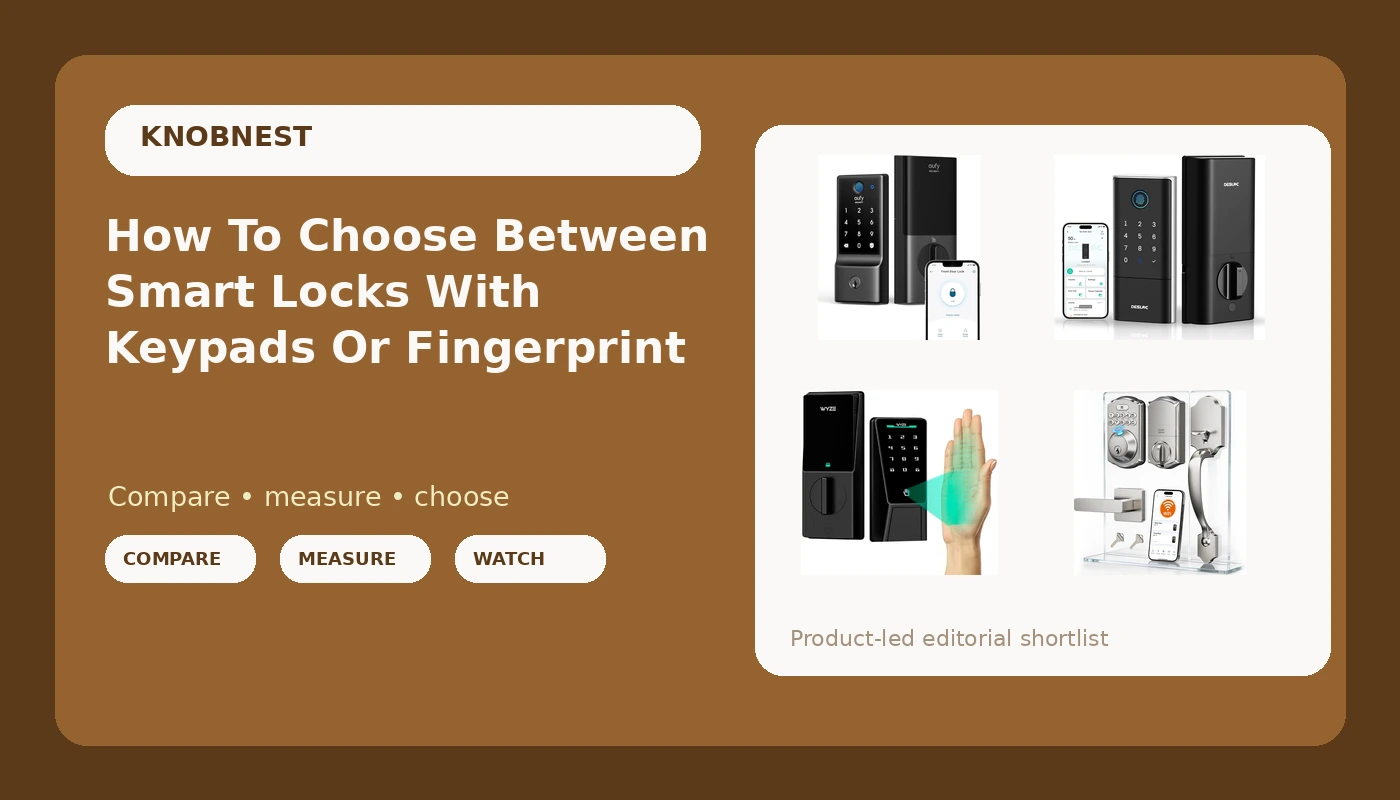
How to choose between smart locks with keypads or fingerprint, explained by a reviewer who actually lives with the gear. No fluff, no marketing language, just what works and what doesn't.
Smart locks are advertised as the ideal choice for people who hate carrying keys, but are they really? I've spent 5 years as a locksmith and installed more than 300 smart locks in Columbus. The short answer is yes, if you choose the right entry method and the lock can still throw its deadbolt after the honeymoon period.
I've learned that the choice isn't simply keypad versus fingerprint. The keypad is dependable when you need to hand out a code. The fingerprint reader is faster when your hands are full. But neither helps much if the motor strains, the batteries die early, or the app turns every guest into a support problem.
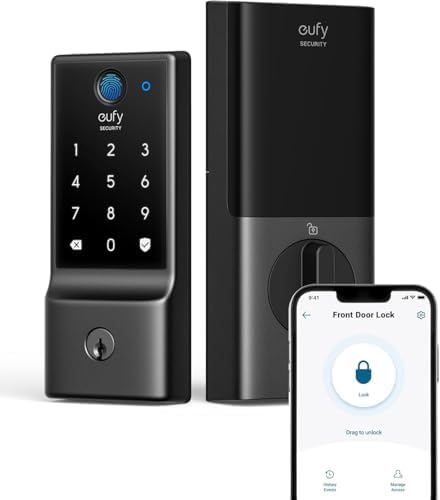
eufy Security Smart Lock C220, Fingerprint Keyless Entry Door Lock
$169.99
Fingerprint entry and built-in Wi-Fi at a fair price
Order Now →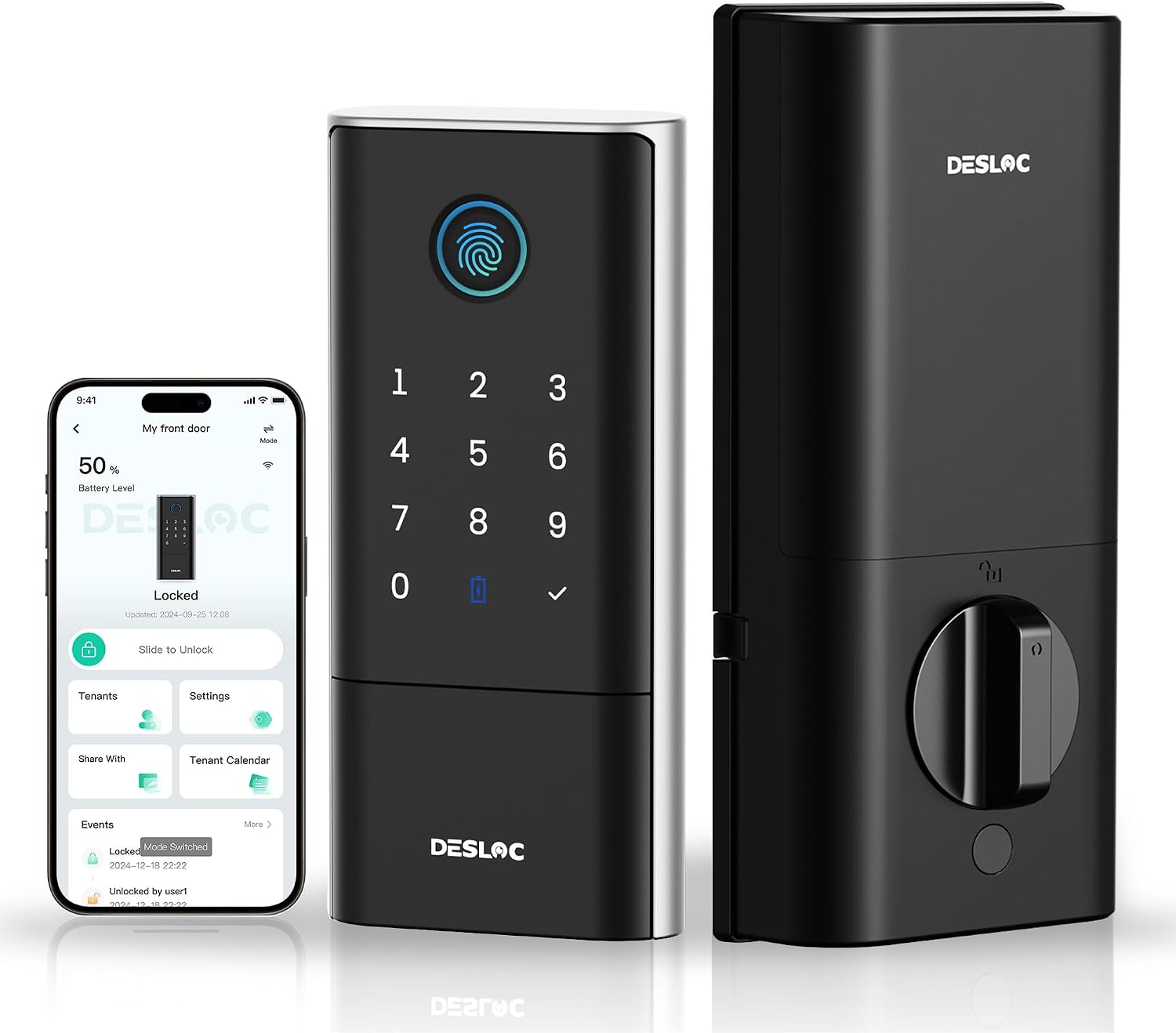
DESLOC Fingerprint Smart Lock K120, 16 Months Last with Li-ion Battery
$99.98
DESLOC is a global smart lock brand trusted by nearly , that aims to develop secure, reliable, and user-friendly access solutions for modern homes and business. With the mission of making life better
Order Now →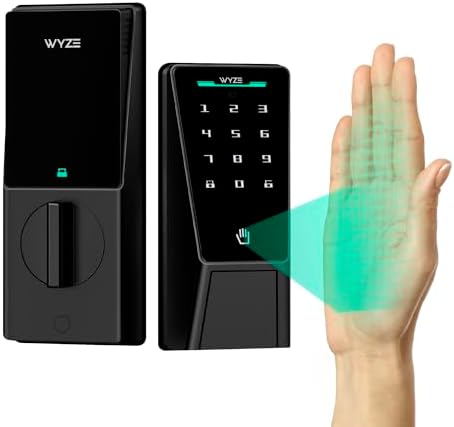
Wyze Auto-Lock Bolt v2, Fingerprint Keyless Entry Smart Lock, AI Learning Scanner with Wi-Fi Front Door Lock Deadbolt, Auto-Lock, 8 Months Battery, BHMA2, IP53, Anti-Peep Keypad, Backup Keys
Check price
Low price and fingerprint entry
Order Now →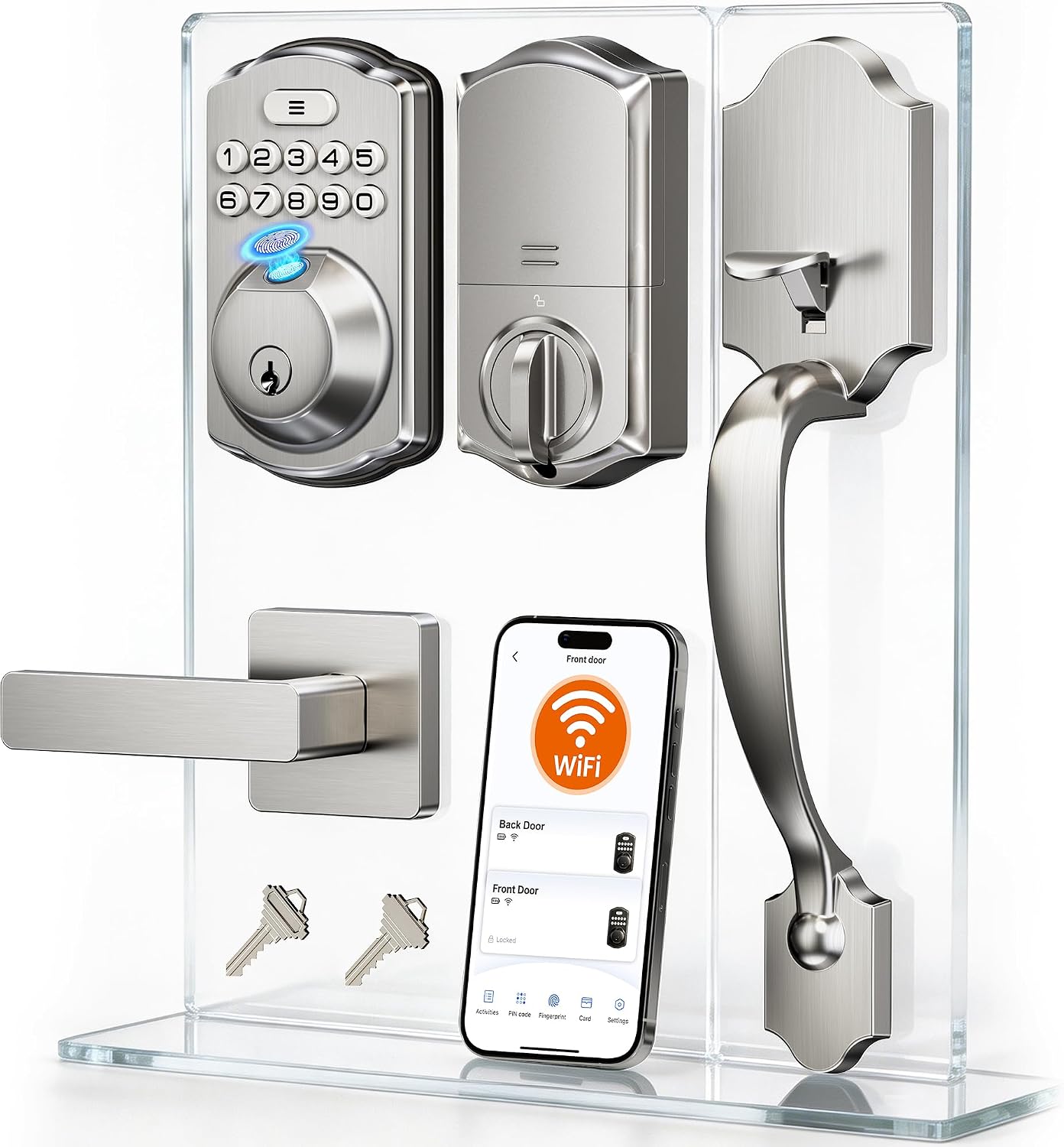
Veise VE012W-H Wi-Fi Smart Front Door Lock Set with Handle, Satin Nickel
Check price
Handle-set format with keypad and Wi-Fi
Order Now →
Smart Door Lock with Video Doorbell & Fingerprint,Security Front Door Locks
Check price
DESLOC is a global smart lock brand trusted by nearly , that aims to develop secure, reliable, and user-friendly access solutions for modern homes and business. With the mission of making life better
Order Now →The first thing I check: the deadbolt, not the sensor
A smart lock that won't throw its deadbolt is just a keypad on a door.
I learned that the expensive way, years before smart locks became common. A tenant loses a key, the landlord calls me at 7 a.m., and I'm drilling out a cylinder that has been sitting outside through rain, dust, and Ohio winters. The electronics are nice, but the bolt is the part that keeps the door closed.
That means I won't buy a lock based on a fingerprint reader working 95% of the time in a clean demo. I want to know what happens on the 5% of attempts when a finger is wet, dusty, cold, or wrapped in a winter glove.
The same goes for a keypad. A code that works from a phone screen is great. A keypad that works with gloves is better. I also look for an anti-peeping pin or privacy feature that lets someone enter extra digits around the real code. Anyone standing nearby shouldn't be able to memorize 6 numbers in 2 seconds.
My own test is simple. Can I get through the door 10 times without trying twice? If the answer is no, the lock isn't finished.
Choose a keypad when access needs to move from person to person
I use keypads for landlords, Airbnb hosts, and the dog walker who comes at noon on Tuesdays. Temporary codes are the killer feature nobody talks about enough.
I can give a guest a 1-time code that stops working after the first use. I can give a cleaner a code that runs from 9 a.m. to 2 p.m. on weekdays. I don't need to hide a key under a rock, and I don't need to drive across Columbus to hand over a duplicate.
A keypad is also easier to hand off to someone who isn't technically minded. They type the code. They don't need to download an app, create an account, or wonder whether their phone's fingerprint sensor is better than mine.
The downside is that a code can be seen, shared, or photographed. The anti-peeping feature helps, but it doesn't make a shared code secret forever. I change rental codes between tenants. I never use the same code on every door.
Choose a keypad lock if you need to let people in remotely without worrying about whether they have a compatible phone. Choose fingerprint if most of your entry is personal and you want the door open before you finish reaching for it.
Choose fingerprint when your hands are usually full
I bought my first smart lock for an Airbnb because I was tired of hiding a key under a rock. I thought fingerprint entry would be the main event. It was convenient, but the code became more useful almost immediately.
A delivery driver can use a temporary code. A tenant can use a code after their fingerprint reader stops recognizing a dirty finger. A guest can get in without adding another person to the app.
Fingerprint readers are fast when they work. One buyer described the feeling as a "futuristic superhero." I get it. Walking up to a door with groceries, touching a reader, and hearing the bolt retract is satisfying.
But this is where the category gets expensive in a way Amazon prices don't show. A fingerprint reader that works on day one can become the "biggest piece of crap I have ever owned" by month seven. That's a real buyer complaint, and it matches the failure pattern I watch for in rental properties.
One buyer's reader worked "95% of the time" at first, then degraded after several months. Another said the reader simply "doesn't work" anymore. I don't treat that as one unlucky unit. It's a reason to be cautious.
For a rental, I care more about the month-seven result than the week-one demo. I want a second entry method available. That usually means a keypad and a physical key override.
eufy Security Smart Lock C220: the sensible fingerprint choice
The eufy Security Smart Lock C220 is priced at ~$99.99. It has fingerprint keyless entry and built-in Wi-Fi, which puts it in the useful middle of this group rather than the toy aisle.
The version I would buy is the C220, but I would not call it a permanent solution based on day-one speed. The question is whether its reader still recognizes real fingers after 7 months in a rental, not whether it worked for a clean finger in a product video.
I like that it sits near the $100 sweet spot. Under $100 is where a lock becomes a no brainer for me, especially when it has auto-lock and a physical way in. I also like built-in Wi-Fi because it can remove one extra box from the setup. Fewer parts mean fewer pairing errors and fewer chances of finding myself in support chat at 11 p.m.
What annoyed me about the category, and what I would watch with this one, is app reliability. The app is the product. If the app is slow, remote access becomes a guessing game. If a guest code fails once, they may think the lock is broken before they try again.
This is the one I'd pick for a personal door where fingerprint entry matters and you want a backup code. Skip it if you need a handle set, because this is a smart lock, not a full exterior handle assembly.
DESLOC Fingerprint Smart Lock K120: battery life is the selling point, and the risk
The DESLOC Fingerprint Smart Lock K120 is ~$95.99. Its big claim is 16 months of battery life from a Li-ion battery. That's a meaningful number if it holds up.
Battery life matters more than most people think. I install locks in rental properties, and a tenant doesn't always report a dying battery before they're standing outside in the rain. A long battery claim is good. A visible battery level in the app is better.
The problem is that 16 months is a manufacturer claim, not something I can promise from looking at a listing. Battery life changes with Wi-Fi signal, temperature, door alignment, reader activity, and how often the motor has to force a stiff deadbolt. A weak battery combined with a misaligned door can make a fingerprint lock feel like a bad lock even when the electronics are fine.
I would use this as a second lock for a property where the door is straight and the tenant wants fingerprint access. I would not choose it solely because the number on the box is bigger than the number on another box.
The K120 is a reasonable choice for someone who wants fingerprint entry without spending $150. Just keep a key within reach, and check the app's battery readings every few months. Auto-lock gives me peace of mind, but only when I know the batteries aren't quietly disappearing.
Wyze Auto-Lock Bolt v2: the budget fingerprint option
The Wyze Auto-Lock Bolt v2 is ~$79.00. That is my kind of price. It is cheap enough to put on a rental door without making the entire project feel like a capital improvement.
The product title includes fingerprint keyless entry and an AI learning scanner. Those features are useful on paper. They also make me suspicious because the fingerprint reader is the first thing I expect to fail in heavy use.
One buyer said a similar fingerprint lock worked "95% of the time" at first. That sounds great until you realize 5% means 15 failed attempts out of 300. In a rental, 300 uses can happen faster than you think. One guest has wet hands. Another has dirt on the sensor. Someone wipes the reader with the wrong cleaner.
The Wyze lock's biggest advantage is the price. Its biggest limitation is that the listing does not list a separate gateway for remote control in the supplied product details. I would not buy it for remote Airbnb access based on the title alone. I would use it for a personal door where local fingerprint and keypad access are enough.
It is a good option if you want to try fingerprint entry without spending $100. I would keep a backup key and a backup code, because a failed reader at 6 months would make this thing an expensive decoration.
Veise VE012W-H: choose this when you need the whole handle set
The Veise VE012W-H Wi-Fi Smart Front Door Lock Set with Handle is ~$99.99. It costs roughly the same as the eufy, but it is a different job.
The eufy is a lock for an existing deadbolt. The Veise is a handle set. That matters if the door needs both the exterior handle and the lock replaced, or if you want a matching entrance package instead of adding electronics to a builder-grade deadbolt.
The version I would choose here is the one that matches the door's bore spacing and handing. I can't tell from the product details whether a specific door is compatible, and guessing is how you end up at Home Depot buying a $3 cover plate at 8 p.m.
A handle set gives you more surfaces, screws, and alignment points. That also means more ways for the install to go wrong. A deadbolt can be slightly out of alignment and still work. A loose handle makes the whole entrance feel cheap.
Wi-Fi is useful for remote access, but it also brings the same 2.4GHz rule. If your network only broadcasts 5GHz, this thing can be invisible to the app. I would check the router before I ordered it, not after.
Choose the Veise if you need a complete handle-set replacement and are comfortable measuring the door. Choose a simpler deadbolt replacement if the existing hardware already works. I would rather spend 20 minutes replacing 6 screws than 2 hours diagnosing a Wi-Fi pairing problem.
The $34.99 keypad-and-fingerprint door knob is a gamble, not a recommendation
The Keyless Entry Door Lock with Keypad Fingerprint Door Knob is ~$34.99. It gives you both a keypad and a fingerprint reader for less than half the price of the other fingerprint options.
That is a lot of features for the money. It is also the listing I would approach like a suspicious landlord: low rent, flexible terms, and no long history.
A door knob is not a deadbolt. It may be appropriate for an interior door, a garage entry, or a low-risk side door. I would not use it as the only lock on a front door without understanding the mechanical strength and deadbolt arrangement.
The biggest flaw is uncertainty. A fingerprint reader's long-term failure risk matters more than its low purchase price. At ~$34.99, the lock costs about 10 cents a day over a year. That is cheap enough to replace, but cheap does not buy peace of mind when the door is your only line of defense.
I would buy this only for a non-critical interior or side door where both entry methods are a convenience. I would not put it on a rental front door and call it secure.
The setup order is the part nobody wants to talk about
Pair the lock to the app first. Then the gateway. Then the lock, if your model requires a separate pairing step. If you did it backwards, factory reset and start over. I've done it twice this month.
I keep a drill, a rekey kit, and a folder of support chat transcripts in my truck. The transcripts usually end with someone discovering that they set up the app before the gateway. That tiny ordering mistake can turn a 20-minute job into a 2-day support saga.
Before I pair anything, I check 3 things:
- The phone is connected to the 2.4GHz network.
- Bluetooth and location services are turned on.
- The door is open, with the bolt fully extended.
Then I follow the manual exactly. Not the order I think is logical. Not the order shown in a 6-month-old setup video. The order in the current manual.
If the gateway "doesn't find my door lock," I factory reset. I don't keep tapping Pair for 45 minutes and pretend the batteries are the problem.
My practical rule for choosing between keypad and fingerprint
Buy a fingerprint lock when you want speed and you're willing to keep a second entry method available. I would still enable the keypad. A reader that fails on a wet finger shouldn't leave anyone locked out.
Buy a keypad lock when you need temporary codes, Airbnb access, or a simple way to give several people entry. Codes are easier to share, easier to expire, and less dependent on one person's fingerprint staying readable.
If you run a rental property, choose auto-lock. Tenants forget to lock doors. I know because I've been the locksmith called after they left in a hurry. Auto-lock gives me peace of mind, and it costs nothing extra once the lock is installed.
I would buy the eufy C220 for a personal door where fingerprint convenience matters. I would buy the Veise handle set when the entire entrance hardware needs replacing. I would use the Wyze Auto-Lock Bolt v2 for a low-risk door where the ~$79.00 price matters most. I would only use the ~$34.99 knob where a cheap keypad and fingerprint reader are better than carrying a key.
The fingerprint reader has to survive month seven, not just week one. The keypad has to be usable with real hands. And the deadbolt has to throw every single time. Buy the one that makes your life easier without making the next locksmith call your problem.